
Your needs, this model
Does it fit your priorities?
Is the SuperNest hammock body 8 feet or 14 feet 6 inches long?
ENO gives both figures but labels them differently: the hammock body is 8 feet long, while 14 feet 6 inches is the total overall spreader-bar length. The product specification separately labels the hanging distance as 14 feet ± 6 inches, and the FAQ calls roughly that its minimum recommended span. Those figures are not interchangeable, so compare your actual stand or anchors with the model instructions.
Explore this need in the finder →Does the standard SuperNest include straps or fit any ENO stand?
No. ENO says the hammock straps are sold separately and its FAQ limits spreader-bar hammock stand compatibility to the SoloPod XL. Check the connector and instructions for the separate strap pair you select; do not treat the hammock's 400-pound capacity as a rating for straps, connectors, the stand or anchors.
Explore this need in the finder →How does the standard SuperNest differ from SuperNest SL?
ENO lists both models with an 8-by-4-foot-7-inch body, 14-foot-6-inch total length and 400-pound hammock capacity. The standard SuperNest has a quilted olefin body with polyester lining and trims, weighs 19 pounds 8 ounces, and packs to 25.5 by 13.5 by 13.5 inches; SuperNest SL uses a mesh body and is listed at 15 pounds 8 ounces with a narrower 11.5-inch pack dimension. Both are bulky lounge hammocks, and neither comparison establishes overnight suitability.
Explore this need in the finder →Does the SuperNest's mesh or open body provide insect protection?
No enclosing screen is documented for the standard SuperNest. Its fabric is an open hammock bed, not a bug-net canopy; ENO's FAQ also excludes SuperNest from its listed net and tarp compatibility. If screening or rain protection is essential, verify a different exact hammock and the accessories the maker says fit it.
Explore this need in the finder →ENO’s SuperNest is a heavily built, quilted spreader-bar lounge hammock for an outdoor space, not a compact gathered-end setup. Its maker-listed 8-foot fabric body and 400-pound hammock capacity make it comparable on the finder’s numeric fields with the separate SuperNest SL, but the two differ in body material, weight, packing size and intended feel. Neither listing establishes an overnight sleep system.
A backyard-first hammock with camp-base use only by choice
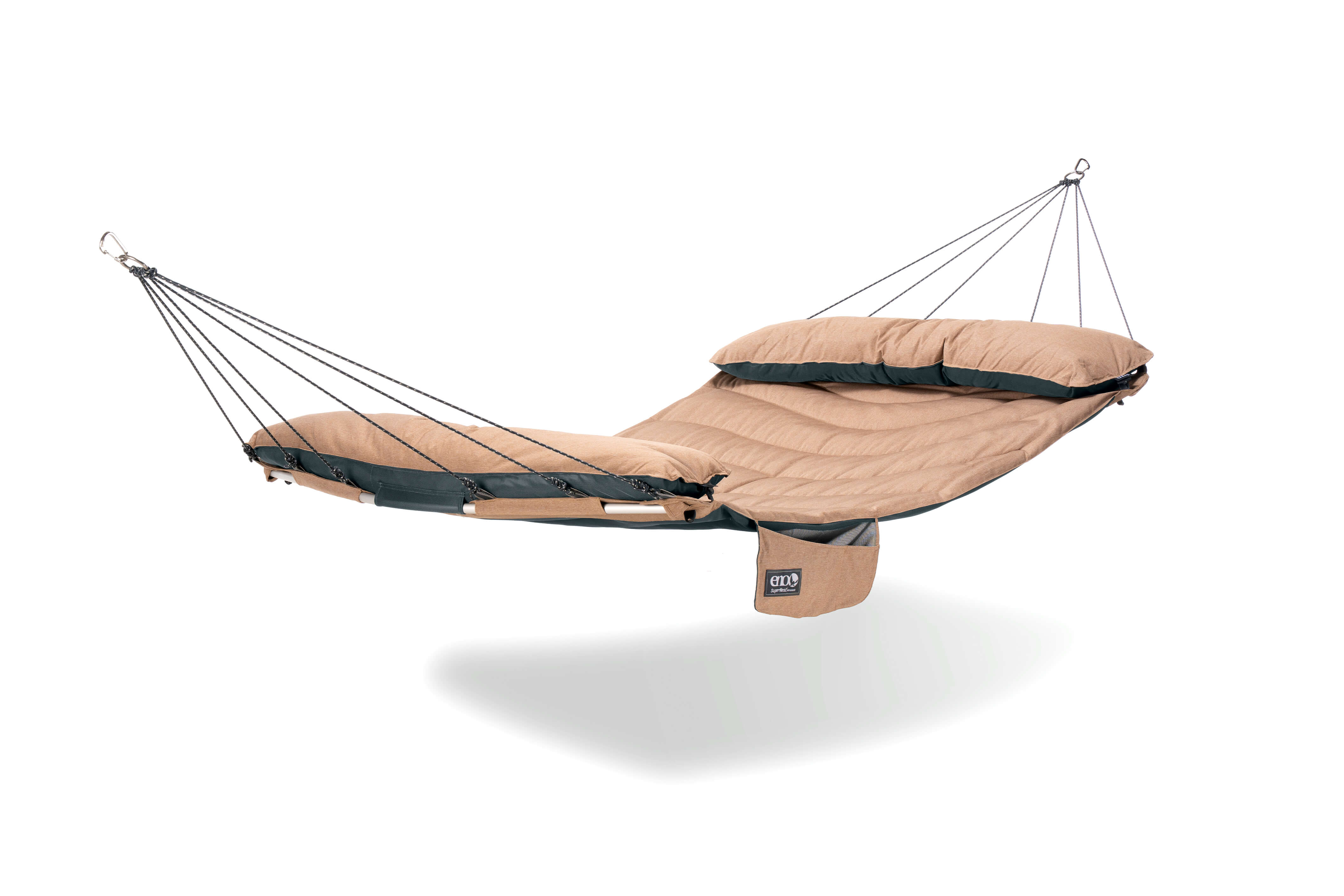
ENO describes the SuperNest as a hammock designed to live seasonally outdoors at home. The product page highlights a contoured spreader-bar shape, quilted fabric, removable pillows, hanging pockets and marine-grade hardware. That is a distinct job from carrying a gathered-end hammock deep into a campsite. ENO lists the hammock itself at 19 pounds 8 ounces and 25.5 by 13.5 by 13.5 inches packed. A car-camp or basecamp buyer with room for a large lounge item may still compare it, but those figures are a poor match for a weight-conscious backpack. The listing does not specify an overnight sleeping system, bug canopy, rain cover or insulation.
Do not confuse the body, full length and hanging span
The listed fabric body measures 8 feet by 4 feet 7 inches. ENO separately lists the overall spreader-bar hammock at 14 feet 6 inches long and labels 14 feet plus or minus 6 inches as its hanging distance. Its FAQ calls roughly that same 14-foot range the minimum recommended hanging distance. Those are separate labels: the 8-foot body is not the overall length, and neither dimension alone tells you whether two real anchors or a stand will work. Measure the chosen installation and follow the exact model sheet rather than treating a product dimension as a universal site plan.
The 400-pound figure is the manufacturer's hammock capacity, not a rating for straps, carabiners, a stand, trees or the assembled load path. The SuperNest setup sheet separately calls for attachment points structurally approved for a 400-pound-plus load. That distinction matters even though 400 pounds appears in both places: it is not permission to assume every component has the same rating.
Quilted fabric versus the SuperNest SL’s mesh
The standard SuperNest uses an olefin body fabric with polyester lining and trim, plus anodized-aluminum spreader bars and stainless-steel hardware. ENO describes wave-inspired quilting and two removable plush pillows. Two divided hanging pockets give small essentials a place off the ground. These are design features claimed in the product description; no independent comfort, long-term weather or durability test was conducted for this assessment.
Compared with the SuperNest SL, the standard version is not simply a different color. Both are listed with an 8-by-4-foot-7-inch body, 14-foot-6-inch total length and 400-pound hammock capacity, but the SL uses a breathable mesh body rather than the standard model’s lined quilted fabric. ENO lists the standard hammock at 19 pounds 8 ounces with a 25.5-by-13.5-by-13.5-inch packed size; the SL is listed at 15 pounds 8 ounces and 25.5 by 11.5 by 11.5 inches. Those differences do not make the SL a lightweight backpacking hammock, and the shared dimensions do not imply that either model fits the same sleeper or campsite.
Neither model’s body mesh or open construction is an integrated bug screen. ENO excludes both SuperNest models from its listed hammock-net and rain-tarp compatibility; plan insect protection, rain coverage and warmth separately if the trip requires them. Do not treat the padded surface as a documented overnight bed or an enclosed shelter.
Suspension is separate, and the stand rule is narrow
The standalone SuperNest page says hammock straps are sold separately, while listing compatibility with ENO hammock straps. The product image shows the hammock body and end hardware, not a supplied strap pair or complete installed system. Before choosing straps, confirm the exact connectors and current instructions for the specific set. For a freestanding frame, ENO’s FAQ says its spreader-bar hammocks are compatible only with the SoloPod XL stand. The SoloPod XL is not part of this standalone hammock listing; do not assume another ENO stand fits because it has similar-looking hooks.
The product FAQ also says the SuperNest is not adjustable and warns not to untie its ropes. If a tighter hang is needed, ENO points to using Apollo straps instead of the SoloPod XL stand. Treat that as model-specific manufacturer guidance, not a universal rigging workaround. Use the current hammock and stand instructions together and confirm your site has suitable, permitted supports.
Installation and seasonal care are part of the decision
ENO’s model sheet shows the spreader bars and pillows seated fully in their corner pockets, carabiner gates checked closed, and suitable supports for the load. Its diagram illustrates a roughly 30-degree hang and tells users to lower themselves in to check adjustments, keep the loaded hammock no more than 18 inches above the ground, inspect the hardware and test the hang before applying full weight. The general ENO safety guidance also says to clear hazards below, inspect before every use, avoid aggressive swinging and not leave children unattended. These are the maker’s precautions, not a site-specific anchor inspection; do not use the hammock if the support or connector arrangement is uncertain.
Although ENO describes seasonal outdoor performance, its FAQ advises taking the hammock down when not in use and storing it in a cool, dry place out of direct sunlight. The model sheet also recommends storing it in its mesh bag during severe weather or extended periods out of use. Read that care advice alongside the broader “all-weather” language: it is not a promise that permanent exposure is maintenance-free.
Who should compare it—and who should keep looking
Consider the standard SuperNest if your priority is a roomy, quilted backyard or car-camp lounge, you can handle a 19.5-pound hammock body and its large packed shape, and you can provide its separate straps or the narrowly compatible SoloPod XL stand. The SuperNest SL is the more breathable mesh-body alternative with the same listed body dimensions and hammock capacity but a lower listed hammock weight. For a smaller pack, an open gathered-end model such as ENO’s SingleNest or DoubleNest presents a very different size and suspension tradeoff; those should be assessed by their own exact package and instructions.
Keep looking if an integrated net, bundled tree straps, a compact backpacking load or a documented sleeping system is essential. The standard SuperNest page lists neither a net nor same-package straps, and its backyard positioning is not evidence of overnight suitability. This is a source-based comparison of the manufacturer’s specifications and instructions—not a claim of ownership, hands-on setup, measured fit or personal comfort.
Key specifications
Key details at a glance
| Hammock body length | 8 ft |
|---|---|
| Hammock body width | 55 in |
| Manufacturer-listed capacity | 400 lb |
| Listed hammock weight | 312 oz |
| Integrated bug net | No |
| Tree straps in this package | No |
Use the exact model’s instructions for operating limits, supplied equipment and version differences.
Sources for this review
Sources for this assessment
- SuperNest™ Hammock product page | ENO
- SuperNest™ Hammock product identity and variants | ENO
- SuperNest Hammock setup, safety, care and warranty sheet | ENO
- ENO Frequently Asked Questions | ENO
- Safety & Instructions | ENO
- SuperNest Hammock Heather Sand manufacturer image | ENO
- SuperNest™ SL Hammock product page | ENO (comparison source)


Compare this hammock with your actual setup
Check the hang, protection and package details before deciding whether it belongs on your shortlist.