
Your needs, this model
Does it fit your priorities?
Does the SuperSub package include tree straps?
No. ENO's exact SuperSub listing says hammock straps are sold separately. Its integrated aluminum toggles are hammock-end hardware, not a tree strap pair. ENO illustrates the toggles threading into the dedicated loops on its Helios suspension; check the exact strap and connector package before treating the setup as complete.
Explore this need in the finder →How does the SuperSub compare with ENO's Sub6?
ENO lists both bodies at 9 feet long and gives each a 300-pound hammock capacity. The SuperSub is 6 feet 6 inches wide and 9.8 ounces; the Sub6 is 4 feet wide and 5.8 ounces. That is 30 inches more listed body width for four more manufacturer-listed hammock ounces, not a comfort guarantee or a complete-system weight comparison.
Explore this need in the finder →What setup spacing should I use for the SuperSub?
ENO's Sub Series instruction sheet says to find two suitable anchors approximately 10 to 14 feet apart, keep the loaded hammock no higher than 18 inches, inspect the gear and test the hang before full loading. The separate product-page 'hanging distance' line says 9 feet 2 inches plus or minus 10 inches; the source does not explain how that measurement relates to anchor spacing, so do not treat it as a guaranteed tree-spacing range.
Explore this need in the finder →The ENO SuperSub is best understood as a wide hammock body designed around a low listed body weight, not as a complete ultralight sleeping system. ENO specifies a 9-by-6-foot-6-inch hammock, 9.8 ounces and a 300-pound capacity. Its standalone listing includes an attached stuff sack, while the matching tree straps are sold separately. This is a research-led assessment of the manufacturer’s published product and setup information; no hands-on use, ownership or testing is claimed.
Its trade is width for a few ounces
The clearest comparison is ENO’s own Sub6. The two share a 9-foot body length, 300-pound maker-listed capacity, 30D ripstop nylon, Silverlite cord, aluminum toggle ends and a stated Helios-strap pairing. The SuperSub is listed at 6 feet 6 inches wide and 9.8 ounces; the Sub6 is 4 feet wide and 5.8 ounces. That is 30 inches more listed body width for four additional hammock ounces, using ENO’s published figures. The dimensions do not predict how a particular person will sleep, and neither model’s 300-pound figure is a rating for straps, connectors, trees, stands or an assembled hang. This makes the SuperSub a distinct choice within the ultralight pair, rather than simply a color or trim variation of the Sub6. The broader body may be relevant to someone who wants more fabric to work with on a diagonal lay, but that is a reason to compare its dimensions—not evidence of a guaranteed flatter or more comfortable night. If minimizing hammock-body weight is the overriding criterion, ENO’s 5.8-ounce Sub6 is the lighter listed option. If more width matters and four ounces fits the planned load, the SuperSub’s numbers make that compromise clear without needing a performance claim.Do not confuse the hammock with the carried system
The 9.8-ounce figure belongs to the hammock, not to a complete camp setup. ENO says straps are sold separately for this model. The standalone listing does not make it an all-in-one insect, rain or cold-weather shelter: no integrated bug net, tarp or under-body insulation is documented as included. Its attached stuff sack is useful for containing the hammock body, but it does not supply those missing functions. For a fair pack decision, list the pieces your trip requires: compatible suspension, any screen, rain cover, insulation and stake or anchor hardware. Their combined carried weight will be more than the body-only figure, and the reviewed evidence does not provide a tested whole-kit weight for your particular combination. This distinction matters especially when the word “ultralight” encourages a comparison of the hammock alone against another product’s complete bundle.The toggle affects what else you need
The SuperSub has integrated aluminum toggles at its gathered ends. ENO’s Sub Series instruction sheet illustrates passing those toggles through the dedicated loops on its Helios suspension; the Helios straps themselves are a separate purchase. A toggle is end hardware, not a tree strap and not a carabiner. Check that the exact suspension you plan to use is compatible before treating the hammock as ready to hang. ENO says its toggle-ended hammocks can also use Atlas-style straps if a separate compatible carabiner is added, and the model page names carabiners as necessary for its stand use. The details change with the connection: ENO’s instruction sheet shows the toggle threaded through Helios loops for one arrangement and a carabiner added for Atlas. Do not assume a carabiner, strap pair or stand connector is part of the standalone hammock package. If you intend to use a stand, identify its exact model and follow both manuals’ connector requirements; the maker’s general compatibility statement is not a substitute for checking the physical hardware supplied with that stand.Use the setup sheet for anchor placement
ENO’s product specification includes a “hanging distance” of 9 feet 2 inches plus or minus 10 inches. Its Sub Series setup sheet separately asks for two suitable trees or anchor points approximately 10 to 14 feet apart. Those labels should not be silently treated as the same measurement: the source material does not explain how the product-page figure maps to anchor spacing. Use the model-specific setup sheet for the stated anchor guidance and check with ENO if a particular site or stand leaves little margin. No precise anchor-spacing guarantee is inferred here. The same sheet says to keep the hammock no higher than 18 inches above the ground, test it before applying full weight, inspect the fabric, rope and suspension before each use, and avoid hanging too tightly. It illustrates roughly a 30-degree sag and an angled lay. These are ENO’s setup directions, not results from testing by this site. Check the actual anchors, clear the fall area, and use the current instructions for the exact arrangement rather than relying on a specification line as a safety check.Who this specification profile does—and does not—answer
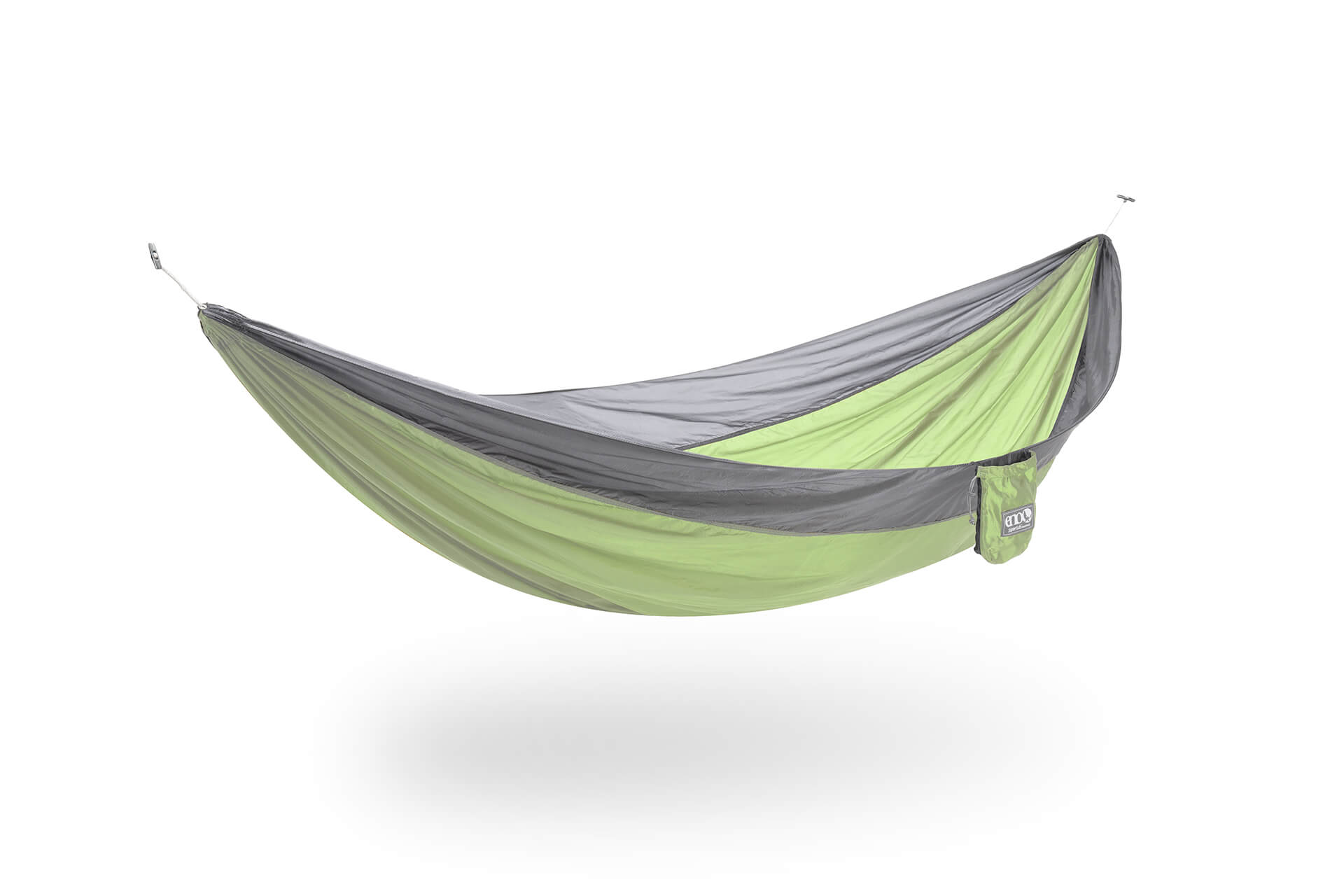
The SuperSub is worth comparing when a 9-foot hammock body, 78-inch listed width, 300-pound hammock capacity and low body-only weight align with your own priorities, and you are comfortable sourcing suspension and shelter layers separately. ENO’s current record lists Cactus/Steel (SKU LS0051) and Yellow/Steel (LS0050); the image here depicts Cactus/Steel. Confirm the color and exact standalone model in any offer, since the name is close to other Sub Series products and a separate system may include additional equipment. Look elsewhere or gather more information if you require straps in the same box, a higher published hammock capacity, an integrated bug screen, weather protection or a complete weighed camp kit. The 300-pound hammock value does not establish a safe limit for the whole load path, and the body dimensions do not guarantee personal fit. For the right shopper, the SuperSub’s appeal is a plainly documented trade: considerably more width than the Sub6 body for four more manufacturer-listed ounces. The remaining decision is whether that body-only exchange still makes sense once the suspension and the rest of your camp setup are counted.Key specifications
Key details at a glance
| Hammock body length | 9 ft |
|---|---|
| Hammock body width | 78 in |
| Manufacturer-listed capacity | 300 lb |
| Listed hammock weight | 9.8 oz |
| Integrated bug net | No |
| Tree straps in this package | No |
Use the exact model’s instructions for operating limits, supplied equipment and version differences.
Sources for this review
Sources for this assessment

Compare this hammock with your actual setup
Check the hang, protection and package details before deciding whether it belongs on your shortlist.