
Your needs, this model
Does it fit your priorities?
What size and capacity does the standard Expedition Zip list?
The M16 page lists 120-by-59-inch lower fabric, a 6-foot height limit and a 250-pound hammock limit. Those figures screen an offer; they do not promise comfort or rate the complete suspension.
Explore this need in the finder →Is the M16's insect mesh part of the hammock?
Yes. Hennessy specifies attached 30D No-See-Um mesh on this side-zip model; the exact page also lists a detachable stock rainfly. Neither component is a warmth rating.
Explore this need in the finder →Does M16 include tree-hugger webbing in the stock package?
The standard page lists 1.5-by-42-inch webbing and says the complimentary standard TreeHugger straps are included; the cited 44-ounce packed claim excludes those straps.
Explore this need in the finder →This is an evidence-led assessment of Hennessy Hammock’s standard U.S. Expedition Zip, SKU M16. I have not owned, camped in, measured, or load-tested it; the observations below come from the exact manufacturer listing, its product record, and the maker’s comparison chart. The central choice is not simply “zippered hammock or not”: this standard offer combines a large side-entry body, attached insect mesh, a stock rainfly and tree-hugger webbing, while separately sold customization options can change the fly or webbing package.
The standard M16 is a ready-to-plan shelter package
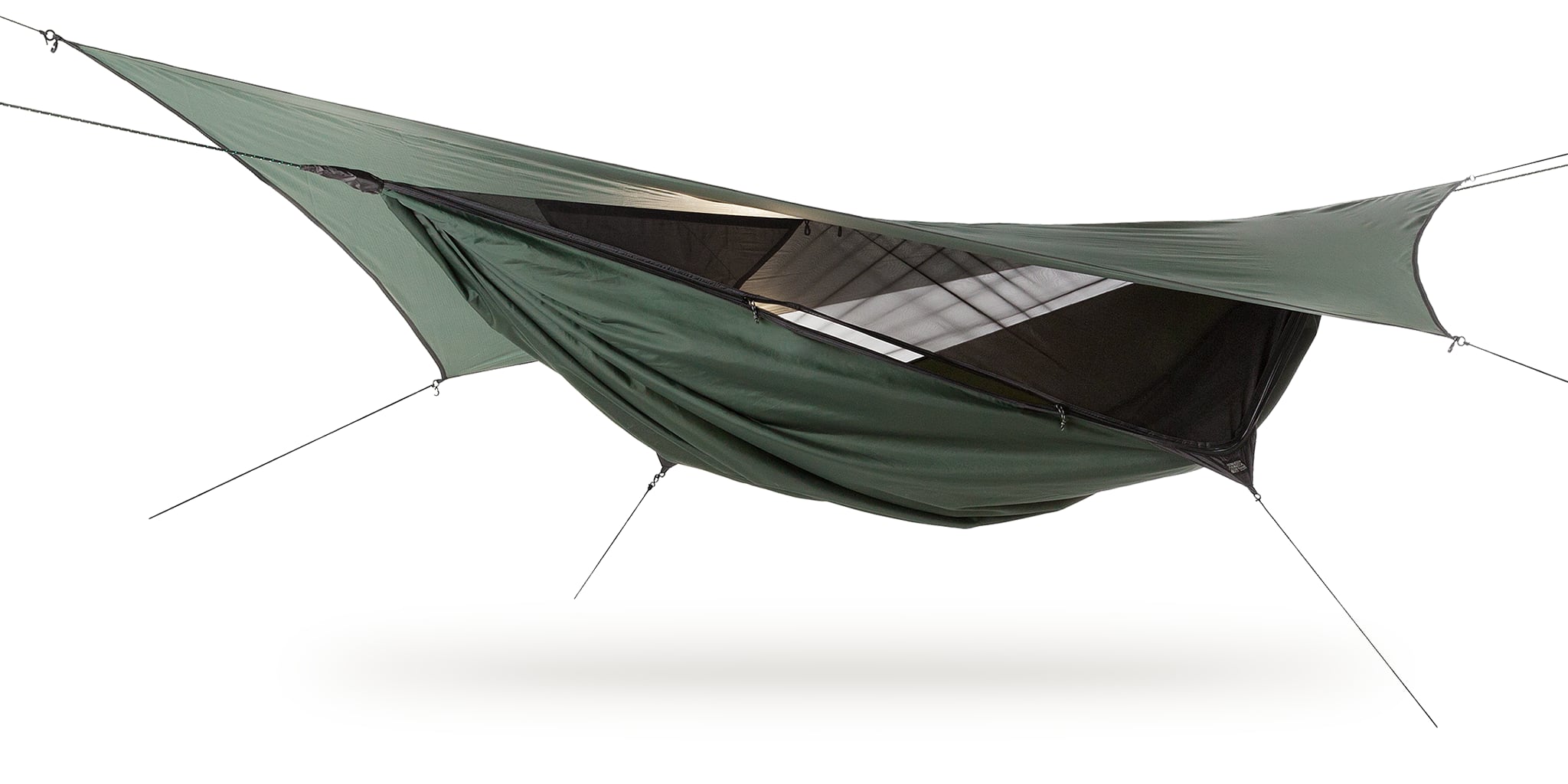
Hennessy identifies M16 as the Expedition Zip and describes it as a large body with side entry, an asymmetrical shape and structural ridgeline. The standard page lists a heavy-duty #10 YKK zipper with two double sliders and 30D No-See-Um mesh. Its “what’s included” section describes attached mosquito netting, a detachable rainfly, support ropes, a compression sack with setup instructions and complimentary TreeHugger webbing. The specific webbing line gives 1.5 by 42 inches. Those details make M16 a different buying task from the company’s separate “Build Your Own” listing: the latter asks the shopper to choose upgrades and should not be assumed to contain this standard package.
The stock cover is a parallelogram rainfly; the product page gives 63 by 99 inches and a 132-inch diagonal above the ridgeline. That is useful identity and planning information, not an independent weather test. A fly also does not turn the hammock into a warm-weather-proof shelter by itself. The exact page lists insulation as an upgrade, not a supplied under-body layer, so anyone planning a cold trip needs a separate, compatible warmth plan rather than treating the double description of the shelter as insulation.
Ten feet of listed fabric is a screen, not a fit guarantee
The maker specifies 120 by 59 inches of lower fabric. Converting the 120-inch body measurement gives 10 feet; the 59-inch figure is the fabric width, not clear sleeping space or a promise that a particular person will lie comfortably. Hennessy states a 6-foot height limit and a 250-pound hammock limit. Use those as manufacturer selection boundaries for the hammock body, not as proof of comfort, a rating for the ropes, or a capacity for the complete arrangement of hammock, webbing, anchors and trees.
The standard specifications list ten-foot polyester-core/cover suspension ropes at 1,500-pound test and 1.5-inch-wide, 42-inch webbing. A component test figure cannot be added to or substituted for the hammock limit; the weakest part and the setup instructions still matter. The page also says the webbing is weighed separately from the hammock. The listed packed weight is 2 pounds 12 ounces before three ounces of webbing, but the same page’s 1,232-gram conversion does not agree with that ounce value or the chart’s 1,247 grams. I retain the stated imperial figure and the discrepancy rather than presenting either as an independent measurement.
What changes when you compare the other zip models?
Compared with the medium Scout Zip, Expedition has a longer listed body (120 rather than 112 inches) and a higher hammock limit (250 rather than 200 pounds); both are screened side-entry packages with included flies and webbing. The Scout’s stock fly is described as larger, so “larger hammock” does not mean “larger fly.” Compared with the Ultralite Backpacker Zip, M16 keeps the same 120-by-59-inch body dimensions but has a higher published limit; the Backpacker’s page and chart disagree on both packed weight and body fabric, so a clean ounces-per-capacity or fabric-durability ranking would overstate what the evidence can settle. For someone prioritizing a tiny pack, the separate Hyperlite listing publishes a smaller packed-size figure, but it is still limited to 200 pounds and has its own material and rope-detail conflicts.
There is also an unresolved material description: M16’s exact page calls the body 70D polyurethane-coated polyester ripstop, while the comparison chart says 70D nylon. Both are first-party sources, and I do not silently choose between them. If fiber identity or coating is central to a purchase or repair plan, ask the maker to identify the current M16 construction. The page’s 2-pound-12-ounce packed figure is a maker claim, not a scale reading from this review.
Who should shortlist it—and what to verify
M16 is a sensible candidate to compare when a 10-foot listed body, 250-pound hammock limit, side zipper, integrated mesh, standard fly and same-package webbing all line up with the plan. It is less compelling if the goal is the lightest listed setup, a wider XL body, a higher stated limit, or a specific confirmed fabric construction. A ZIP body and stock fly still require compatible, sound anchors and a site where the supplied suspension can be set correctly; verify the actual package, suspension instructions, the fly contents and any need for longer straps before relying on the listing.
Before purchase, match the title and SKU to M16 rather than a Classic-entry Expedition or the customizable body offer, and check that the stock rainfly and 42-inch webbing are in the exact seller’s package. The maker’s current page lists no under-body insulation in the base kit. Review current safety and recall information, inspect the actual components when received and follow the manufacturer’s setup and care directions. The assessment is based on published specifications, not a field demonstration, load test, or promise of overnight comfort.
Key specifications
Key details at a glance
| Hammock body length | 10 ft |
|---|---|
| Hammock body width | 59 in |
| Manufacturer-listed capacity | 250 lb |
| Listed package weight | 44 oz |
| Integrated bug net | Yes |
| Tree straps in this package | Yes |
Use the exact model’s instructions for operating limits, supplied equipment and version differences.
Sources for this review
Sources for this assessment
Compare this hammock with your actual setup
Check the hang, protection and package details before deciding whether it belongs on your shortlist.