
Your needs, this model
Does it fit your priorities?
What size and capacity does standard M56 list?
Hennessy gives 120-by-59-inch lower fabric, a 6-foot height limit and a 200-pound hammock limit. The limit is a body claim, not the capacity of suspension and anchors together.
Explore this need in the finder →Is an integrated bug net included?
Yes. The exact Hyperlite Zip page lists attached 20D polyester No-See-Um mesh and a side entry; it also describes the stock detachable rainfly in the standard package.
Explore this need in the finder →Does the stock M56 offer include tree-hugger straps?
The standard page lists one-inch-by-42-inch webbing and says the complimentary pair is included. This is different from the custom body listing, so confirm the standard-rainfly model and current seller package.
Explore this need in the finder →This is a research-led assessment of the stock-rainfly U.S. Hennessy Hammock Hyperlite Zip, SKU M56. I have not packed, carried, weighed, set up, slept in, or load-tested it. The model is presented for people reducing pack size, but its comparison with the similarly sized Ultralite Backpacker Zip deserves a closer look: the two share several body and capacity figures while Hennessy lists a smaller pack size and different fly specification for Hyperlite. Both products also have conflicts within the maker’s own descriptions, so this is not a laboratory weight or fabric review.
Standard M56: compact dimensions with a full fly package
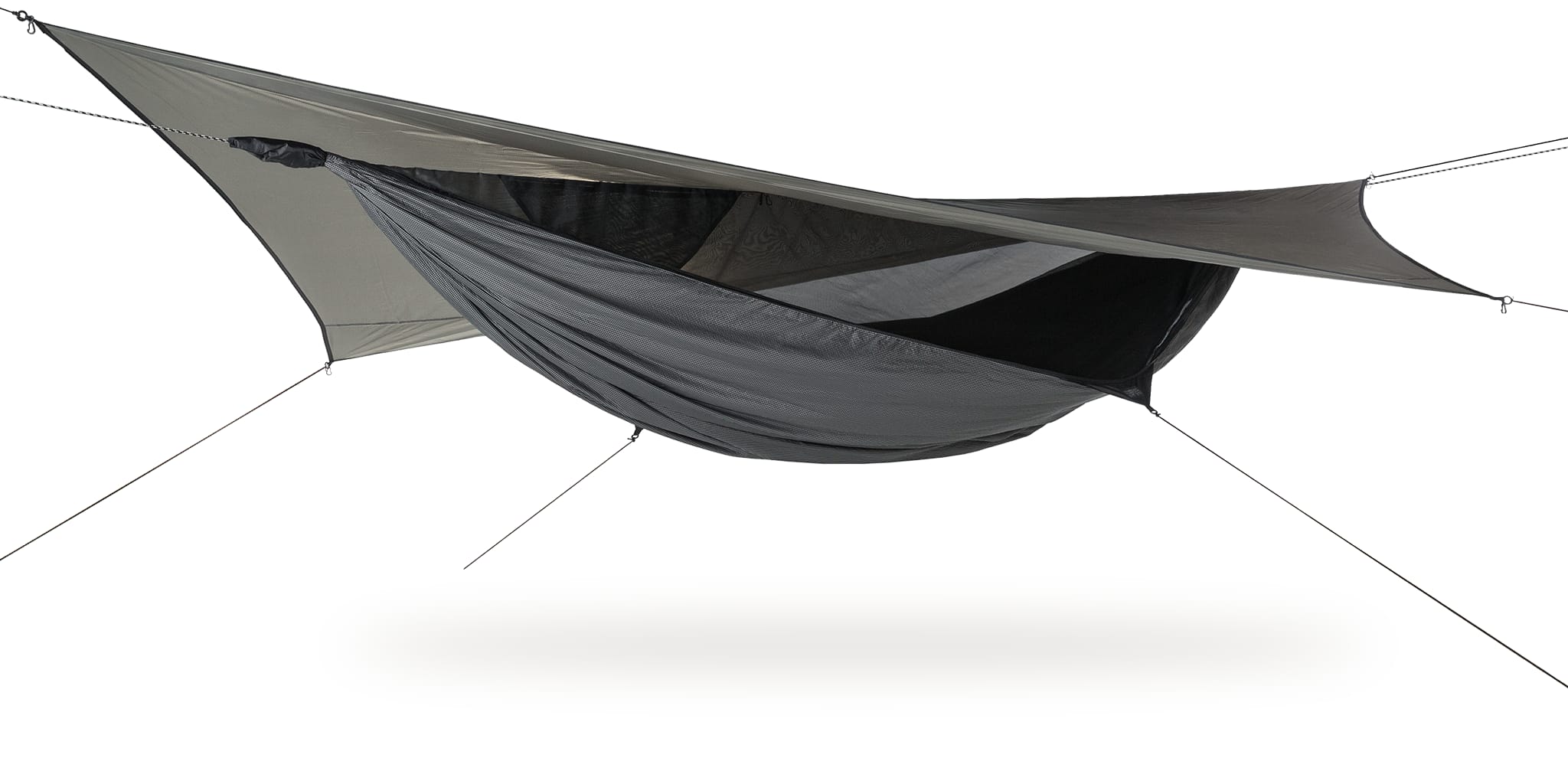
The exact product page identifies the standard configuration as Hyperlite Zip M56 / UPC 832667225249. It is a large side-entry hammock with attached 20D polyester No-See-Um mesh, a structural ridgeline and asymmetrical body. Hennessy lists 120 by 59 inches of lower fabric, a 6-foot height limit and a 200-pound hammock limit. The lower-fabric length converts to 10 feet; the 59-inch width is not interior sleeping room or a promise of comfort. The limit applies to the hammock as described, not to the complete suspension, anchors or trees.
The standard offer is distinct from the already catalogued Hyperlite custom listing, which starts with the body and selected webbing but no fly. M56’s product page lists a detachable 63-by-99-inch parallelogram rainfly, a 132-inch diagonal above the ridgeline, ten-foot Spectra ropes, 1-inch-by-42-inch webbing, attached mesh, and a compression sack/setup instructions. The fly and webbing are components to use according to their exact instructions, not a claim that the hammock will remain dry in every wind or rain direction. The base page does not list an under-body insulation pad.
Compactness has a more useful evidence basis than the slogan
Hennessy’s product page says 28 ounces before the free two ounces of webbing and lists a packed size of 4 by 8 by 5 inches. The comparison chart gives the same 1-pound-12-ounce weight but 793 grams, whereas the product page says 784 grams; that conversion difference is worth preserving. The maker also calls Hyperlite its lightest and most compact model. Those are manufacturer claims, not measurements made for this article. A user’s carried total can be larger after adding the exact webbing, insulation, repair items and other trip-specific pieces.
Its named comparator, the Ultralite Backpacker Zip, has the same published 120-by-59-inch fabric dimensions and 200-pound body limit, but its page lists a 5-by-8-by-12-inch packed size and a 30D rainfly versus Hyperlite’s 20D fly. The Backpacker page and chart disagree about its weight (31 versus 32 ounces) and hammock fabric (30D coated Silnylon 66 versus charted 70D nylon). That makes the listed pack dimensions the clearest numerical distinction, while neither product’s material or weight evidence is consistent enough to support a precise durability or trail-load conclusion. A nominally thinner fly is a specification difference, not proof that one will withstand a particular storm better.
Material and component claims that need confirmation
The Hyperlite page describes a 30D Spectra-reinforced bottom in its narrative but lists 30D high-tenacity PU/silicone-coated Silnylon 66 ripstop in the specification table; the comparison chart calls it 30D nylon/Spectra. These are related but not identical descriptions, and I retain the difference rather than declaring one material identity. The zipper gauge is likewise unsettled: the narrative says #3 YKK, while the specification line says #5. The rope detail lists a 1,200-pound test but the narrative says 1,450 pounds. I would not choose hardware or calculate a complete setup from one of those conflicting claims without confirmation from Hennessy.
None of the rope or webbing test numbers is a full-hang rating. A hammock’s published limit, suspension parts and actual anchors must be considered according to the maker’s directions; the highest individual-component number cannot be treated as the capacity of the assembly. The integrated net and fly also do not include under-body insulation, so a cold-weather use plan needs separately verified gear.
Who should compare M56?
The Hyperlite Zip is worth assessing when a large, 10-foot side-entry body, 200-pound manufacturer limit, attached insect mesh, stock rainfly and small listed packed dimensions suit the intended trip. It is less suitable when the user needs a greater published load or height limit, wants a settled material spec before buying, or expects the listed 28 ounces to include every carried item. Those are meaningful tradeoffs rather than conclusions about a sleeper’s personal comfort.
Before purchase, distinguish standard M56 from the custom no-fly body listing and confirm that the exact offer includes the stated stock fly and 42-inch webbing. Ask the maker to resolve the zipper gauge, rope test and body-material descriptions if they materially affect the choice. Review current safety and recall notices; inspect the arriving product and follow its instructions for suspension, anchors, setup and care. This analysis does not certify performance in wind, rain or cold, and it reports no personal-use or load-test result.
Key specifications
Key details at a glance
| Hammock body length | 10 ft |
|---|---|
| Hammock body width | 59 in |
| Manufacturer-listed capacity | 200 lb |
| Listed package weight | 28 oz |
| Integrated bug net | Yes |
| Tree straps in this package | Yes |
Use the exact model’s instructions for operating limits, supplied equipment and version differences.
Sources for this review
Sources for this assessment
Compare this hammock with your actual setup
Check the hang, protection and package details before deciding whether it belongs on your shortlist.