
Your needs, this model
Does it fit your priorities?
What size and capacity does the standard M26 list?
The page gives a 120-by-59-inch lower-fabric body, a 6-foot height limit and a 200-pound hammock limit. Body dimensions do not promise comfort and the capacity is not a complete-hang rating.
Explore this need in the finder →Does M26 have an integrated bug net?
Yes. The exact Zip page lists attached 20D polyester No-See-Um mesh and a side-entry two-slider zipper; the standard offer also identifies a detachable stock rainfly.
Explore this need in the finder →Are webbing straps in the same M26 standard package?
The page lists one-inch-by-42-inch webbing and says standard TreeHugger straps are included. The custom M26 body listing is a different package, so confirm the standard-rainfly option and all components in the seller's offer.
Explore this need in the finder →This is a source-based assessment of the standard U.S. Hennessy Hammock Ultralite Backpacker Zip, SKU M26, with its listed stock rainfly. I have not carried, set up, slept in, weighed, or tested the hammock. The practical question is whether the standard M26’s long-trail-oriented package suits a buyer who wants a large side-entry body with attached mesh and a fly, while accepting a 200-pound manufacturer-listed hammock limit and several unresolved differences in the maker’s own specifications.
What the standard M26 offer contains
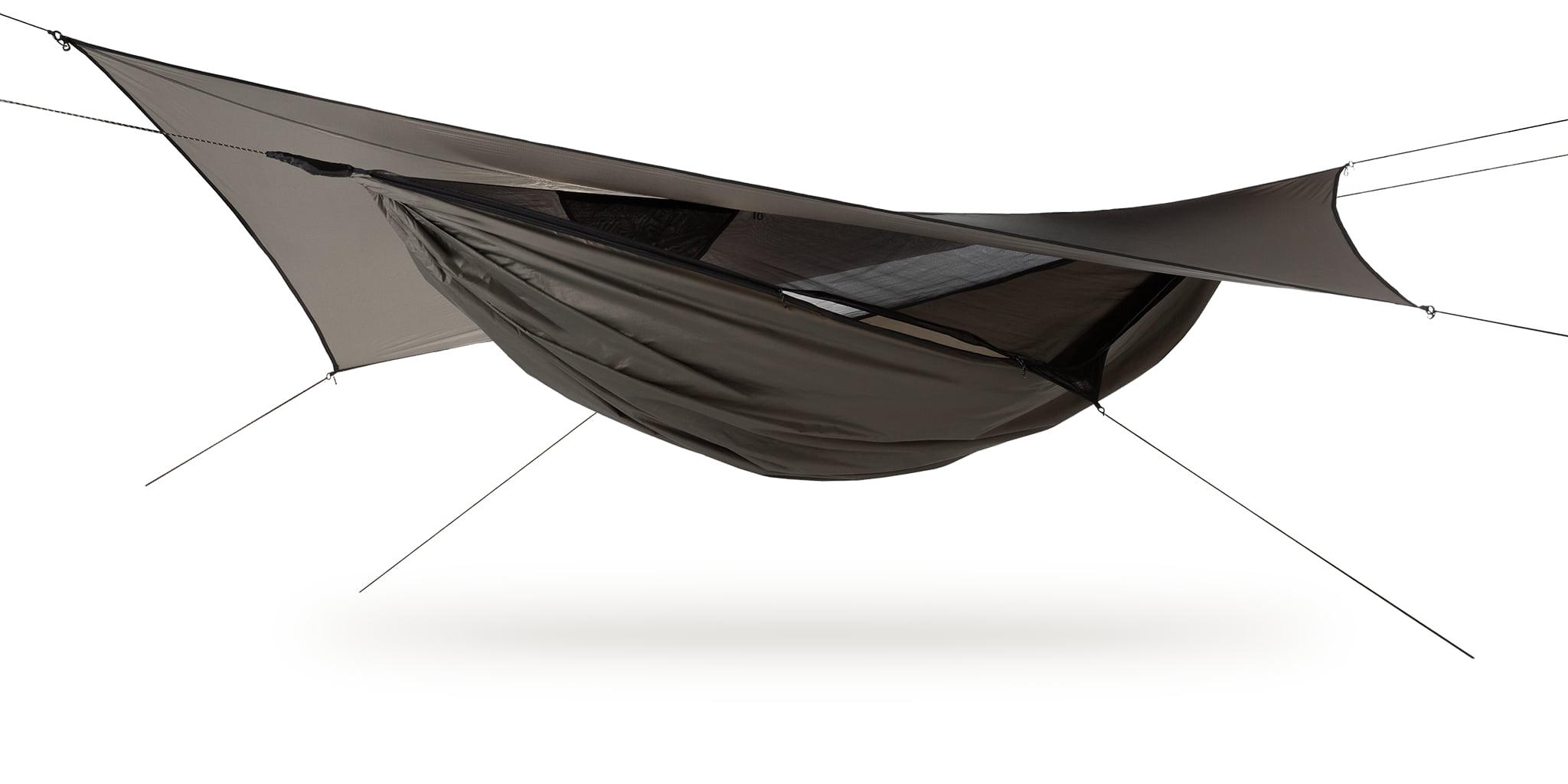
The product record identifies the offer as “Standard Rainfly,” distinct from Hennessy’s separately observed “Customize your Ultralite Backpacker Zip” body-plus-webbing listing. The standard page describes a side entrance with two-slider #5 YKK zipper, attached 20D polyester No-See-Um mesh, support ropes, compression sack and setup instructions, detachable rainfly, and 42-inch tree-hugger webbing. The listed webbing is one inch wide. The fly is a parallelogram measuring 63 by 99 inches, with a 132-inch diagonal above the ridgeline; the page identifies it as the standard rainfly. The base package does not list under-body insulation, so warmth remains a separate system decision.
The exact page lists a 120-by-59-inch lower-fabric body, a 6-foot height limit and 200-pound hammock limit. Dividing 120 inches by 12 yields a 10-foot listed fabric length. Neither that calculation nor the fabric width guarantees a comfortable lay; the latter is not interior sleeping space. The 200-pound figure applies to the hammock as stated by Hennessy, not to the entire suspension, anchor and tree arrangement.
Lightweight is a claim with a source conflict
The M26 page’s description calls the model one pound fifteen ounces, while its specification block lists 2 pounds, or 896 grams, and the comparison chart says 1 pound 15 ounces / 879 grams. The page and chart therefore do not support one clean, internally consistent packed-weight claim. The product record’s package weight is also not an independent measurement, and the webbing is weighed separately according to the manufacturer. I leave the mass unresolved rather than making a precise trail-load comparison from whichever source sounds most attractive.
There is a similar body-material discrepancy. The exact product page lists 30D high-tenacity PU/silicone-coated Silnylon 66 ripstop; Hennessy’s chart calls the body 70D nylon. Those descriptions do not match. The chart identifies a 30D Silnylon fly, while the model page gives the 63-by-99-inch fly dimensions. If the fabric specification influences repair, coating care, or a durability choice, ask the manufacturer to clarify the current M26 construction. Nothing in this assessment independently verifies denier, coating, fabric longevity, or packed mass.
Comparing it with the Hyperlite Zip
The Ultralite Backpacker Zip and Hyperlite Zip share a 120-by-59-inch lower-fabric body, a six-foot stated height limit, a 200-pound hammock limit, attached insect mesh, and a standard fly. Their identity-level differences are still useful: M26 lists a 30D fly and 5-by-8-by-12-inch packed size; Hyperlite lists a 20D fly and 4-by-8-by-5-inch pack size, and its published mass is 28 ounces before its webbing. By contrast, M26’s description/specification/chart disagree between 31 and 32 ounces. These are manufacturer statements, not comparative packing tests. Hyperlite also has conflicting body-material and rope-test wording, so the evidence does not justify a simple “same hammock, lighter fabric” story.
Both are side-entry models with integrated netting, but their zipper gauge differs: M26’s page says #5, while Hyperlite’s narrative says #3 and its spec line says #5. The standard M26 webbing is one inch by 42 inches; Hyperlite also lists one-inch webbing, but a shopper should verify the exact variant and package instead of extrapolating from a neighboring offer. Both use a separate custom body page as well as a standard-rainfly page; a first-step custom package is not equivalent to the fly-equipped M26 being assessed here.
Use plan and buying checks
M26 may be a relevant shortlist entry if the priority is a 10-foot side-entry hammock, attached screen, stock cover and included tree-hugger webbing, and the body’s 200-pound and six-foot manufacturer limits fit the intended user. It is a less obvious choice when the decisive criterion is the lowest confirmed total pack mass, a higher published capacity, or a settled fabric specification. The word “Ultralite” and a long-distance narrative are not substitutes for a consistent weight basis or evidence about an individual user’s comfort.
Before buying, match M26 to the standard-rainfly SKU and confirm the fly, ropes, sack/setup information and 42-inch webbing are in the exact offer; do not accidentally choose the custom no-fly body listing. Check whether separate insulation is needed, read the full suspension and site-safety directions, and make sure the actual trees, anchor spacing and strap lengths are appropriate. The product page does not publish a universal tree-span guarantee. Review current safety and recall notices, ask Hennessy about the unresolved weight and fabric fields if they matter, and inspect the delivered product before use. No field use or hands-on testing is claimed.
Key specifications
Key details at a glance
| Hammock body length | 10 ft |
|---|---|
| Hammock body width | 59 in |
| Manufacturer-listed capacity | 200 lb |
| Listed package weight | 32 oz |
| Integrated bug net | Yes |
| Tree straps in this package | Yes |
Use the exact model’s instructions for operating limits, supplied equipment and version differences.
Sources for this review
Sources for this assessment
Compare this hammock with your actual setup
Check the hang, protection and package details before deciding whether it belongs on your shortlist.