
Your needs, this model
Does it fit your priorities?
Does the Mantis package cover both bugs and overhead rain?
Kammok lists a removable insect net and rainfly as included parts. The net can be removed, and the fly is a separate layer to rig; neither replaces underbody warmth, so choose insulation for the forecast and use the exact setup instructions.
Explore this need in the finder →Are tree straps included with Mantis, and what does that imply for setup?
The exact package list includes two Python 10 straps as well as the hammock-end slings and Kanga Claws. The linked setup sheet specifies suitable trees 13–18 feet apart and a maximum hanging height of 18 inches; check the supports and follow the current instructions rather than treating the hammock capacity as a whole-hang rating.
Explore this need in the finder →What is the material tradeoff between Mantis and Mantis UL?
Both product pages list the same 120-by-56-inch body and removable screen/rainfly concept, but standard Mantis uses 40D GravitasX and a 500-pound body limit; Mantis UL uses 20D Levitas and a 300-pound body limit. Kammok's packed-weight figures are 3.06 pounds and 2 pounds 4 ounces respectively. Neither package includes underbody insulation.
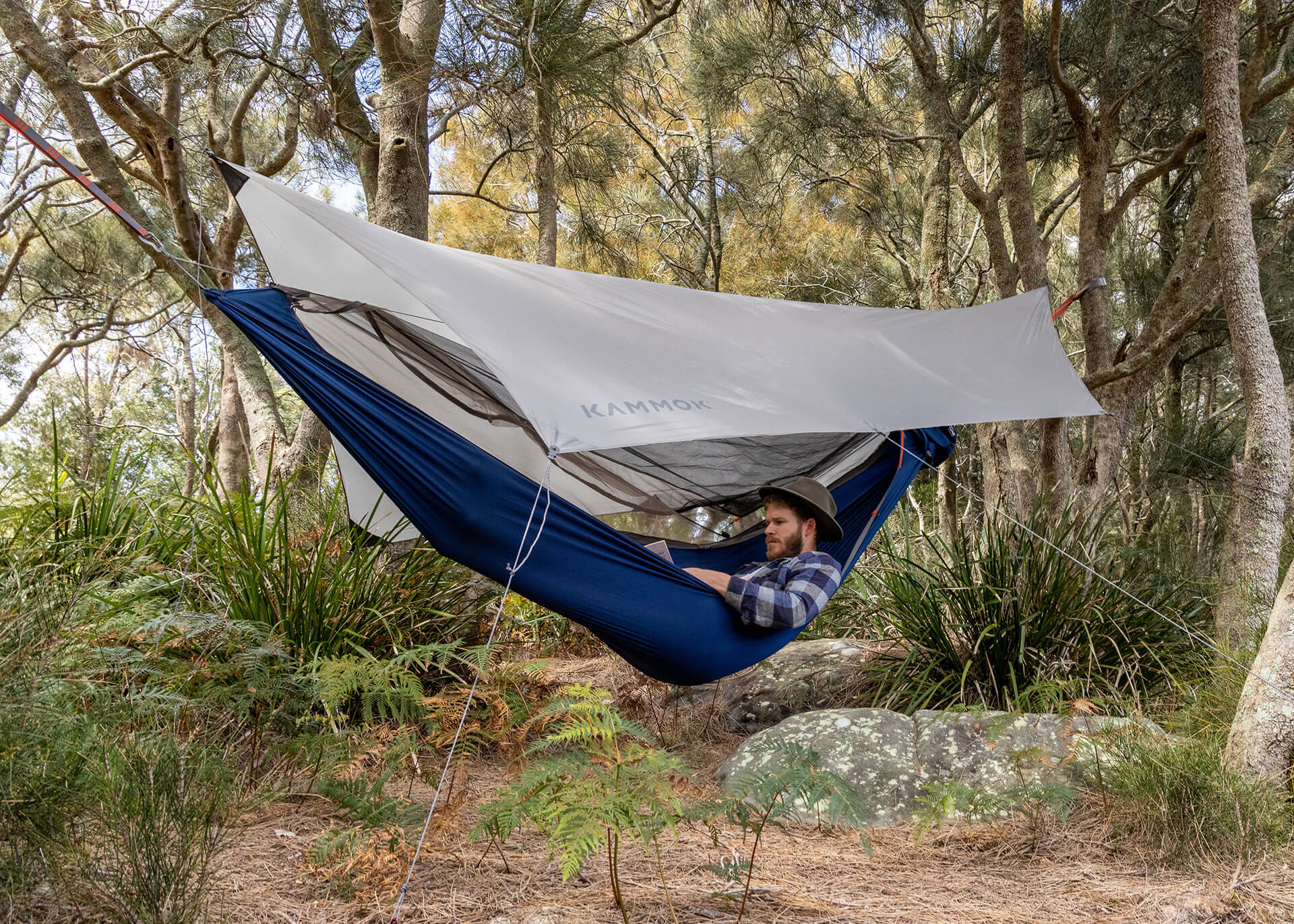
Explore this need in the finder →Kammok’s Mantis is a complete, screened hammock-tent package rather than an open hammock with add-ons left for later. Its documented distinction from the Mantis UL is not body size: both pages list a 120-by-56-inch body. The standard Mantis instead pairs a 40D GravitasX body with a 500-pound hammock limit, a removable bug net, rainfly, Python 10 straps, end hardware and stakes. That combination makes the important question less “will this hammock fit?” than “does this heavier, more fully equipped package make sense for the trip and the user's load requirements?”
A broader package with a different weight basis
The exact Mantis page lists 3.06 pounds as total packed weight, 2 pounds 11.5 ounces as trail weight with the rainfly and 2 pounds without it. Those figures describe different contents, not competing measurements of the hammock body. The page does not provide a body-only weight, so this assessment does not invent one. Compare like with like before treating the Mantis as a heavier alternative to its UL sibling.
The listed body uses 40D GravitasX diamond-ripstop nylon, described as recycled, bluesign approved, DWR treated and given a crinkle finish. Kammok's own page gives a 500-pound maximum and recommends one sleeper. That body limit is not the safe working capacity of every part of a completed hang: Python straps, end connectors, anchors, support trees and setup all matter independently. The linked Mantis setup sheet also says to keep the hammock no more than 18 inches above the ground and to inspect the fabric and straps before each use.
What is actually in the tent-hammock system
Kammok lists a hammock body with structural ridgeline, a removable bug net, a rainfly, two Racer Slings, two Kanga Claws, two Python 10 tree straps, guy-outs, six stakes and a dual-compartment roll-top sack. The removable canopy is part of the supplied system, but it need not be deployed in every configuration. The fly is another separate layer: it must be hung and guyed out when overhead cover is needed. The manufacturer's two-page setup sheet describes trees 13 to 18 feet apart, clipping the hammock connectors into the tree straps and optionally staking the hammock wings. These are specific setup instructions, not a promise that every campsite has suitable anchors.
That amount of included gear is the Mantis's practical advantage over an open body such as Kammok's Roo models: the buyer is not assembling the basic insect-and-rain package from separately chosen accessories. It is also a real carrying tradeoff for a trip where a net or rainfly is unnecessary. The fly, stakes and straps remain part of the package even when the plan is to leave one layer behind.
Weather protection does not solve cold from below
The removable screen addresses insects; the fly is overhead weather cover. Neither is an insulated barrier under the sleeper. Kammok's own setup sheet suggests a sleeping pad or underquilt for colder conditions, and the product description discusses compatible insulation separately. Treat the hammock as a shelter-and-suspension package, not a complete warm sleep system. The fly's presence also does not eliminate the need to choose a pitch and site for the actual forecast.
Where the standard Mantis makes the most sense
Kammok labels the standard Mantis for basecamp hammock camping, recreational use and backyard lounging, while its feature copy also addresses trail use. The strongest evidence-based fit is for a buyer seeking one pre-bundled screened system with an included fly and ordinary Python 10 straps, who values the 40D body's stated 500-pound limit and can accept the 3.06-pound total-packed figure. If minimum packed weight is the priority, compare the Mantis UL using its own trail-weight and total-packed labels rather than assuming the standard package has a lighter hidden body weight.
The 120-by-56-inch fabric dimensions are useful screening numbers, not a guarantee of comfort, an ideal lay or a required support span. Kammok recommends one sleeping occupant even though parts of the page describe a broader lounge capacity. This assessment therefore does not frame Mantis as a two-person sleeping hammock.
Two source details worth checking
The current Mantis product specification lists six outside and eight inside gear loops. The linked setup sheet's parts list instead says six exterior and six interior loops. The discrepancy is preserved rather than silently choosing one number; it does not affect the size, capacity or package matching here. Confirm the exact physical version if loop count matters for your intended accessories.
Finally, product images show one manufacturer's depiction of a Mantis arrangement, not proof of a particular offer's color, all package contents, dimensions or weather performance. Before buying, verify that the seller's exact model is Mantis rather than Mantis UL, confirm the supplied straps and fly, read the current instructions and check the safe condition and suitability of the anchors. No hands-on use or independent load, comfort or weather test is claimed in this research-based comparison.
Key specifications
Key details at a glance
| Hammock body length | 10 ft |
|---|---|
| Hammock body width | 56 in |
| Manufacturer-listed capacity | 500 lb |
| Listed package weight | 48.96 oz |
| Integrated bug net | Yes |
| Tree straps in this package | Yes |
Use the exact model’s instructions for operating limits, supplied equipment and version differences.
Sources for this review
Sources for this assessment
Compare this hammock with your actual setup
Check the hang, protection and package details before deciding whether it belongs on your shortlist.